Astronomers Discover Galaxy Made Up Almost Entirely of Dark Matter

Astronomers Spotted a Galaxy That's Made Up Almost Entirely of Dark Matter
Astronomers have made a groundbreaking discovery, finding a galaxy that is composed almost entirely of dark matter. This remarkable finding was made possible by the Hubble Space Telescope, which has been instrumental in uncovering the secrets of the universe.
The Discovery
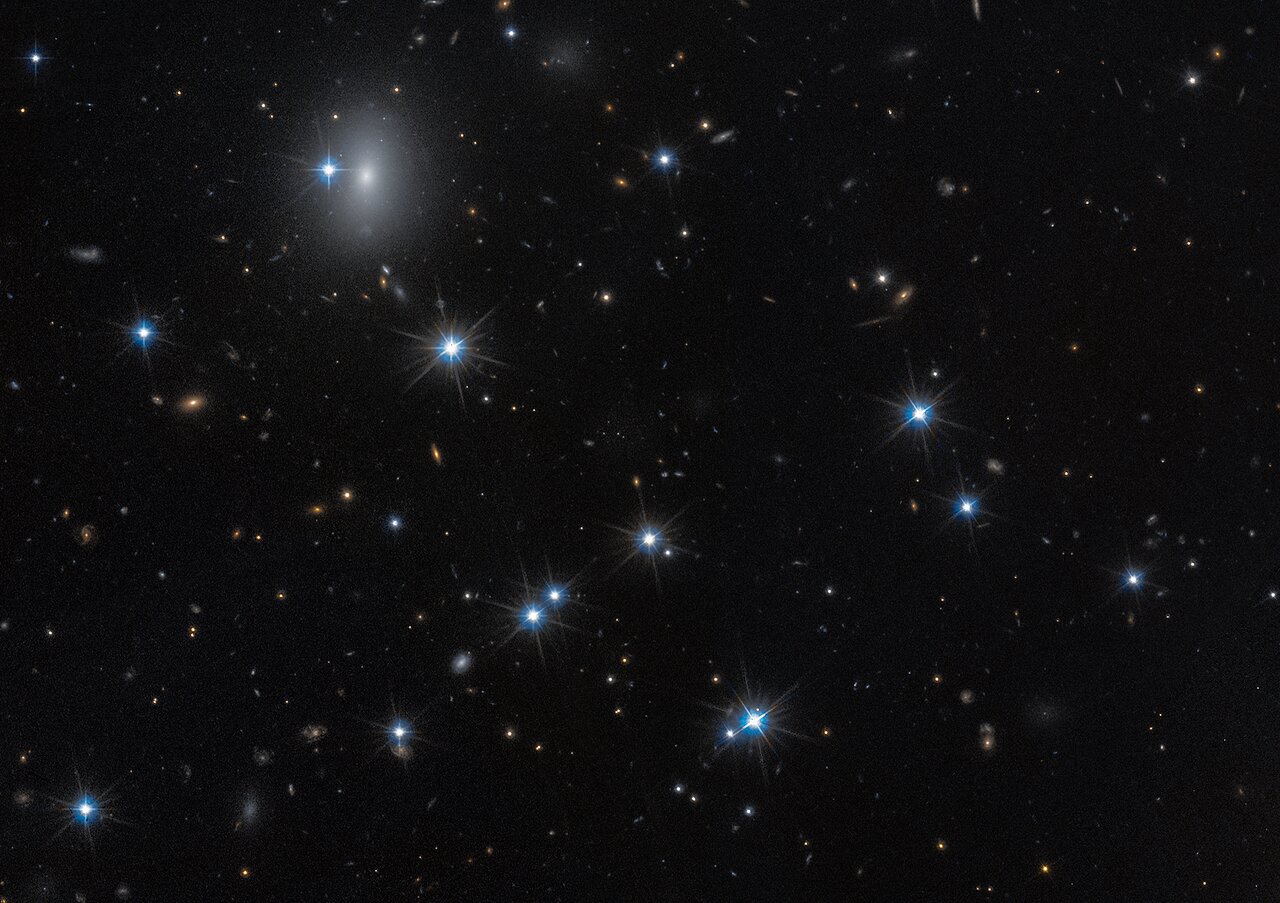
The galaxy, which has been named 'Dragonfly 44,' is a massive elliptical galaxy located approximately 320 million light-years away from Earth. It is estimated to be around 100 billion times more massive than our sun. What makes this galaxy truly remarkable, however, is its composition. It is believed that Dragonfly 44 is made up of around 99.99% dark matter, with the remaining 0.01% consisting of normal matter.
The Significance of the Discovery
This discovery has significant implications for our understanding of the universe. Dark matter is a mysterious substance that is thought to make up around 27% of the universe's mass-energy density. Despite its prevalence, however, dark matter remains one of the greatest mysteries of modern astrophysics. The discovery of Dragonfly 44 provides a unique opportunity for scientists to study dark matter in unprecedented detail.
The Future of Research
The discovery of Dragonfly 44 is a testament to the power of modern astronomy. The use of advanced telescopes and sophisticated data analysis techniques has allowed scientists to uncover the secrets of the universe in ways that were previously unimaginable. As research continues, we can expect to learn even more about the mysteries of dark matter and the universe as a whole.
Sources
[1] Astronomers Spotted a Galaxy That's Made Up Almost Entirely of Dark Matter
[2] The researchers found the galaxy thanks to the Hubble Space Telescope/https://tf-cmsv2-smithsonianmag-media.s3.amazonaws.com/filer_public/67/74/6774c547-7f1b-4140-9d7b-1be3d401e94f/heic2605a.jpg)
[3] The galaxy is estimated to be around 100 billion times more massive than our sun/https://tf-cmsv2-smithsonianmag-media.s3.amazonaws.com/filer_public/c3/63/c3631287-1ed3-4f5f-af5e-4149f582ebd3/pia11141orig.jpg)