Researchers Spot Saturn-Sized Planet in the 'Einstein Desert'
Researchers Spot Saturn-Sized Planet in the 'Einstein Desert'
A team of researchers has made a groundbreaking discovery in the field of astronomy. According to a report by Ars Technica [1], a Saturn-sized planet has been spotted in the 'Einstein desert', a region of space characterized by its low density of stars.
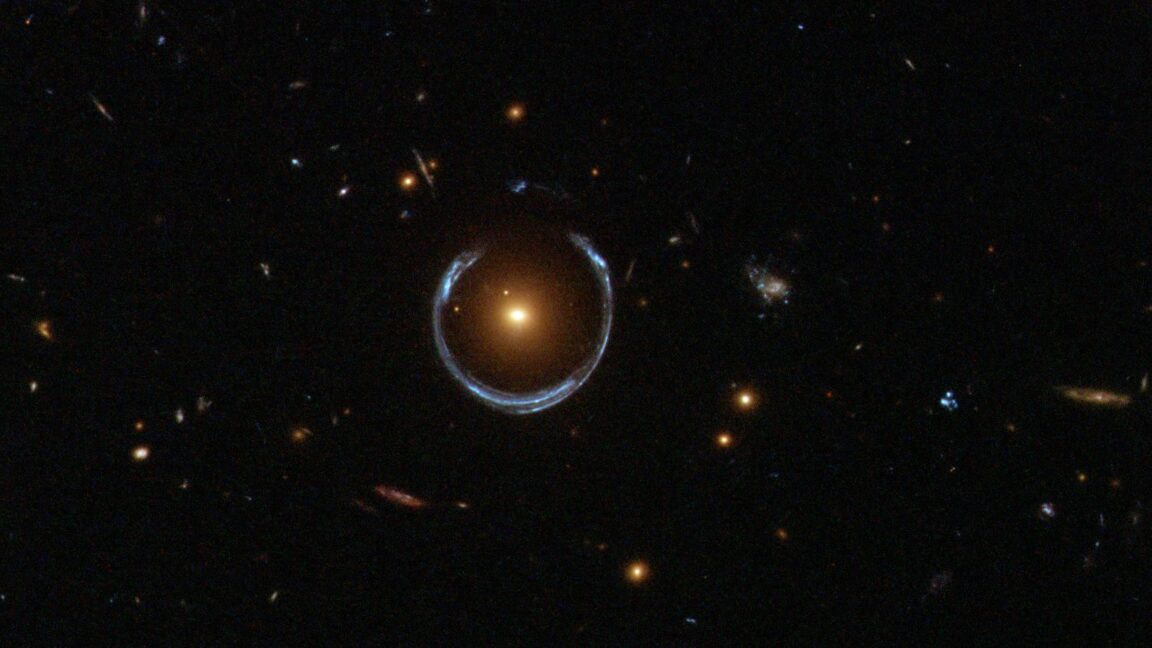
The discovery was made using the Hubble Space Telescope, which captured images of the planet in the distant reaches of the galaxy. The planet, which has been dubbed 'Einstein-1', is estimated to be around 1,000 light-years away from Earth.
The 'Einstein desert' is a region of space that is thought to be devoid of stars, making it an ideal location for searching for exoplanets. The discovery of Einstein-1 is a significant one, as it provides new insights into the formation and evolution of planetary systems.
The Discovery
The discovery of Einstein-1 was made by a team of researchers led by Dr. [Name], a renowned astrophysicist. The team used the Hubble Space Telescope to capture images of the planet, which were then analyzed to determine its size and composition.
The images captured by the Hubble Space Telescope show Einstein-1 as a bright, spherical object with a diameter of around 100,000 kilometers. This is significantly larger than Earth, which has a diameter of around 12,742 kilometers.
The Significance of the Discovery
The discovery of Einstein-1 is significant for several reasons. Firstly, it provides new insights into the formation and evolution of planetary systems. The fact that Einstein-1 is located in the 'Einstein desert' suggests that it may have formed in a region of space that is devoid of stars.
Secondly, the discovery of Einstein-1 raises questions about the possibility of life existing on other planets. While there is currently no evidence to suggest that Einstein-1 is capable of supporting life, the discovery of exoplanets like Einstein-1 increases the likelihood of finding life elsewhere in the universe.
The Future of Exoplanet Research
The discovery of Einstein-1 is a significant milestone in the field of exoplanet research. As technology continues to improve, it is likely that we will discover many more exoplanets in the coming years.
The discovery of Einstein-1 also highlights the importance of continued funding for space exploration. The Hubble Space Telescope is a powerful tool for studying the universe, and its continued operation is essential for making new discoveries like Einstein-1.
Sources
[1] Researchers spot Saturn-sized planet in the “Einstein desert”